哈尔滨医科大学营养与食品卫生学科始创于1949年。教研室创办人刘志诚教授翻译了俄文教材,并主编了第一本我国自编高等院校《营养与食品卫生学》统编教材。1981年获得国务院首批博士、硕士学位授予权。1982年刘志诚教授作为主要起草人,参与起草了我国第一部《食品卫生法》(试行)。1987年建立了营养与食品卫生学本科专业。1989年获批全国同类专业唯一的国家级重点学科,2002年、2007年连续再次被评为国家重点学科。1991年被批准为国家首批博士后流动站。1998年被授予“长江学者”特聘教授岗位学科。1990年被卫生部批准为食品毒理和食品理化分析鉴定单位。1996年被卫生部批准为保健食品功能学鉴定单位。1997年被农业部和卫生部认定为农药登记毒理学试验认可单位。2006年营养与食品卫生学实验室被批准为黑龙江省重点实验室。2012年营养与食品卫生研究团队被批准为“黑龙江省普通高等学校科技创新团队”。2013年获批“省级领军人才梯队”。2020年获批国家卫健委区域性营养创新平台。2021年获批全国黄大年式教学团队。2023年获得教育部精准营养与健康重点实验室。

(教研室全体照片合影)
教学上,营养与食品卫生学教研室负责本科生、研究生和留学生教学工作。授课形式多样化,如智慧课堂、虚拟仿真、PBL教学,双语教学等。连续主编了全国高等院校本科生教材《营养与食品卫生学》的第二版(1981)至第九版(2025),其中孙长颢教授主编的第八版获得全国优秀教材建设成果二等奖。所开设的“营养与食品卫生学”课程2012年获得国家级精品资源共享课程,“营养与食品卫生学”获得线上、线上线下混合、虚拟仿真国家一流本科课程3项,2022年获批教育部首批虚拟教研室建设试点。获国家级教学成果二等奖2项,霍英东教育基金会“高等院校教育教学奖”二等奖1项,省级教学成果一等奖6项、二等奖4项。同时主编了国家规划教材“食品安全监督与管理”第一版,教研室已经培养了808名研究生,其中171名博士,637名硕士。
科研上,学科有稳定的3个研究方向:①营养相关疾病的流行病学及分子营养学研究;②食物中生物活性成分对营养相关疾病的作用研究及产品开发;③食品安全研究。“十二五”以来,学科共获科研课题183项,其中包括“863计划”重点项目、“十二五”国家科技支撑项目、科技部重点研发计划、“四大慢病”科技部重大专项、国家自然科学基金重点项目等国家级课题,国家自然科学基金联合项目等国家级课题,累计科研经费7800余万元;发表SCI论文271篇;影响因子10以上的文章18篇,单篇最高影响因子31.4,多篇论文被国际内行高度评价或做编者述评。获教育部一等奖(1项)、省政府一等奖(3项)、省政府二等奖、中华医学会奖等科研成果奖22项;发明专利4项。为企业开展200多项保健食品功能性和安全性评价,并与企业合作开发了10余种功能性食品。
教研室的发展及成绩的获得,凝聚和浸染着老一辈学者太多的心血和汗水。自学科建立以来,历届学科带头人刘志诚教授、于守洋教授、陈炳卿教授、吴坤教授、孙长颢教授在不同历史时期为学科的建设和发展做出难以磨灭的贡献,他们爱岗敬业、孜孜以求、开拓进取的科研精神也在一代代传承,不断壮大着学科的发展。教研室现有教师24人,正高职10人,副高职2人,中级职称7人,实验技术人员5人;其中博士生导师9人,硕士生导师3人,45岁以下教师18人,具有博士学位18人。学术地位及荣誉不断提高,教师中有中国营养学会副理事长、监事长,国家食物与营养健康产业技术创新战略联盟副理事长,教育部高等学校公共卫生与预防医学类专业教学指导委员会副主任委员,国家“万人计划”领军人才1人,国家“万人计划” 青拔人才1人,有国家百千万人才工程入选者2人,吴-杨奖获得者1人,国家有突出贡献中青年专家2人,国务院特殊津贴获得者、全国优秀科技工作者、全国教学名师、黑龙江省教学名师、龙江学者特聘教授、黑龙江省优秀科技工作者等。
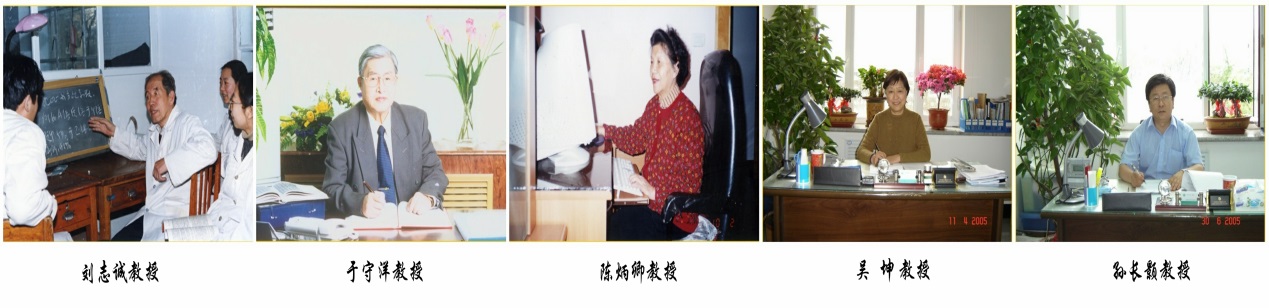
(历届学科带头人照片)
营养与食品卫生学实验室于2002年被评为黑龙江省教育厅重点实验室,2007年获批黑龙江省重点实验室,2023年获批教育部重点实验室,2024年获批国家卫健委“食品原料与成分”领域特色实验室联合建设单位。现有使用面积1406m2,仪器设备总值5600余万元。实验室包括分子生物学实验室、细胞培养室、仪器分析室、食品理化分析室、行为毒理实验室、微生物实验室、以及大型仪器设备室实验室。设备包括超高效液相/超高分辨率串联四极杆离子淌度高清成像质谱、超高效液相色谱-四极杆/飞行时间质谱联用仪、AVANCEⅢ500MHz 超导傅里叶核磁共振谱仪、离子色谱仪、自动纯化液相色谱、酶标仪、液相色谱-质谱仪、全自动生化分析仪、流式细胞仪、气相色谱法-质谱联用仪、单细胞蛋白质表达定量分析系统、全自动蛋白质印记定量分析系统,细胞转染仪、冷冻干燥机、核酸蛋白分析仪等。设备水平已接近或达到国际水平。可满足开展人群研究(队列、干预)、分子生物学研究、食品理化分析、代谢组学研究的需要。

(实验室仪器照片)
The Brief Introduction to the Department of Nutrition and Food Hygiene
The department of nutrition and food hygiene was founded in 1949 in Harbin Medical University. Professor Zhicheng Liu was the founder. He translated some textbooks in Russian into Chinese versions and edited the first textbook of “Nutrition and Food Hygiene” used by universities of China. In 1981, our department firstly achieved the quality for conferring doctor's degree and master's degree by the State Council. In 1982, Professor Zhicheng Liu, as the main drafter, participated in the drafting of China's first “Food Hygiene law”(trial implementation). In 1987, the undergraduate major of nutrition and food hygiene was established. In 1989, our department was approved as the only “National Key Discipline” of “Nutrition and Food Hygiene” specialty in China and again awarded asthe“National Key Discipline” in 2002 and 2007. In 1991, it was approved national postdoctoral research station as the first batch in China. In 1998, it was awarded the post of special professor of "Yangtze River scholars". In 1990, it was approved by the Ministry of Health as the “Identification Unit for Food Toxicology and Food Physicochemical Analysis”. In 1996, it was approved by the Ministry of Health as the “Functional Identification Unit of Health Care Products”. In 1997, it was approved by the Ministry of Agriculture and Ministry of Health as “Qualified Unit for Toxicological Tests for Pesticide Registration”. In 2007, nutrition and food hygiene laboratory was approved as the “Key Laboratory of Heilongjiang Province”. In 2012, the nutrition and food hygiene research team was entitled as the "Science and Technology Innovation Team of Heilongjiang Ordinary Colleges and Universities". In 2013,our team was approved as "Provincial Leading Talent Echelon". In 2020, our department was approved as “Regional Nutrition Innovation Platform” of National Health Commission. In 2021, it was approved as a national Huang Danian-style teaching team.In 2023, it was awarded the “Key Laboratory of Precision Nutrition and Health of Ministry of Education”.
Education. Our department is responsible for the teaching of undergraduates, postgraduates and international students. The teaching forms are diversified, such as intelligent classroom, virtual simulation, PBL teaching, bilingual teaching, etc. We have successively edited the textbook of “Nutrition and Food Hygiene” from Second Edition (1981) to theNinthEdition (2025) as the national undergraduate textbook. The eighth edition edited by Professor Sun Changhao won the second prize of National Excellent Textbook construction achievements. In 2012, the course of “Nutrition and Food Hygiene” was awarded the “National Top-quality Resource Sharing Course”, and awarded asthree courses of online, online combined offline“Virtual Simulation National FirstClassUndergraduate Course”. In 2022, this MOOC was approved as the first batch of virtual teaching and research office construction pilots by the Ministry of Education. Our department has won2thesecond prize for national teaching achievementsand"Higher Education and Teaching Award" of Fok Yingdong Education Foundationeach, 2 second prizes of national teaching achievements, 6 first prizes and 4 second prizes of provincial teaching achievements. Our departmentedited the first edition of the national planning textbookof"Food Safety Supervision and Management"and up to now,has trained808graduate students, including171doctors and637masters.
Scientific research. Our department has three stable research directions:①epidemiological and molecular nutrition research of nutrition related diseases;②research on the effects of bioactive ingredients in food on nutrition related diseases and products development;③food safety research. Since the 12th Five Year Plan, our department has been supported by 183 scientific research projects, including the key projects of 863 program, National Science and technology support projects of the 12th Five Year Plan, the Key R&D Program of the Ministry of Science and Technology, the Major Project for Chronic Non-communicable Diseases Prevention and Control by the Ministry of Science and Technology, key projects of National Natural Science Foundation of China and National Natural Science Foundation of China Joint Project. The total research fund has reached more than 78 million yuan; 271 SCI papers have been published; 18 papers with impact factors above 10 and the highest impact factor of 31.4, which have been highly appraised by international experts or commented by editors. Our department has been awarded of 22 scientific research achievement awards, including 1 first prize of the Ministry of Education, 3 first prize of provincial government, 22 the second prize of provincial government and the award of Chinese Medical Association, and 4 invention patents. More than 200 functional and safety evaluation of health food were carried out for enterprises, and more than 10 kinds of functional food were developed in cooperation with enterprises.
The development and achievement of the department are connected with efforts from the older generation of scholars. Since the establishment of our department, all the previous leaders, such as Professor Zhicheng Liu, Shouyang Yu, Bingqing Chen, Kun Wu and Changhao Sun, have made indelible contributions to this work in different historical periods. Their research spirit of dedication, diligence and pioneering spirit has been passed on from one generation to another. Now, there are 24 teachers in our department, including 10 with senior title, 2 with vice-senior title, 7 with middle title, and 5 experimental technicians. Among them, there are 9 doctoral supervisors, 3 master tutors, 18 teachers under the age of 45, and 18 with doctoral degrees. Among the teachers, some professors have the title of vice president and Supervisor-General of China Nutrition Society, vice chairman of national food and nutrition health industry technology innovation strategic alliance, vice chairman of Teaching Guidance Committee of public health and preventive medicine of colleges and universities of Ministry of education, 1 national "Ten thousand Plan" leading talent, 1 national "ten Thousand Plan" young talent, 2 candidates for “Millions of National Talent Projects”, 1 winner of the Wu-Yang Award, 2 “National Prize for Outstanding Contributor”, “Recipients of the State Congress's Special Allowance”, “National Outstanding Scientific and Technological Researcher”, “National Teaching Master”, “Teaching Master of Heilongjiang Province”, “Specially Employed Professor of Longjiang Scholar”, and “Excellent Scientific and Technological Researcher of Heilongjiang Province”.
Nutrition and food hygiene laboratory was awarded the Key Laboratory of Heilongjiang Provincial Education Office in 2002 and Heilongjiang Provincial Key Laboratory in 2007.Our laboratory was approved as the Key Laboratory of the Ministry of Education in 2023, and in 2024 it was approved as a joint construction unit for the "Food Raw Materials and Components" Featured Laboratory of the National Health Commission. Its area is 1406m2, and the total value of instruments and equipment is more than 56 million yuan. The laboratory includes molecular biology laboratory, cell culture room, instrument analysis room, food physical and chemical analysis room, behavior toxicology laboratory, microbiology laboratory, and large-scale equipment room laboratory. The equipment includes ultra performance liquid chromatography / ultra high resolution tandem quadrupole ion mobility high definition imaging mass spectrometry, ultra performance liquid chromatography quadrupole / time of flight mass spectrometry, AVANCE Ⅲ 500MHz Superconducting Fourier nuclear magnetic resonance spectrometer, ion chromatography, automatic purification liquid chromatography, enzyme labeling instrument, liquid chromatography-mass spectrometry, automatic biochemical analyzer, flow cytometry, gas chromatography-mass spectrometry, single cell protein expression quantitative analysis system, automatic protein imprinting quantitative analysis system, cell transfection instrument, freeze dryer, nucleic acid protein analyzer, etc. The equipment level has reached the international level. It can meet the needs of population research (cohort, intervention), molecular biology research, food physical and chemical analysis and metabonomics research.